


You’ve decided you want a massage, but one thought keeps holding you back. What if the pressure is too strong? What if it actually hurts instead of helping? This is one of the most common worries first-time customers bring to any massage spa in Ajman, and it’s a fair one to have. The good news is that pressure isn’t fixed, and a professional therapist builds the whole session around your comfort, not a set routine.
Why This Fear Feels So Real
If you’ve never had a massage before, you’re working off guesswork. Maybe you’ve heard a friend say Thai massage left them sore for two days. Maybe you just assume a massage means firm hands pressing hard, whether you like it or not.

This fear isn’t irrational. It comes from not knowing how a session actually works.
Once you understand that pressure is something you control, not something done to you, the whole idea feels less intimidating. That’s really what this article is about.
Chameli Spa and the Idea of “One Size Fits All” Pressure
Here’s the biggest myth worth clearing up. There is no single, correct amount of pressure that every massage uses. A good therapist doesn’t have one fixed style they apply to everyone who walks in.
At Chameli, pressure is treated as something personal to you, not a default setting the therapist starts with and never changes. What feels right for one person can feel like too much, or too little, for someone else entirely.
This is exactly why asking about pressure before your session isn’t unusual. It’s expected.
Is Pressure Fixed, or Can You Actually Ask for Changes?
This is the question most first-timers don’t know the answer to. Many assume that once the massage starts, that’s the pressure you’re stuck with for the full session.
That’s not true. A trained therapist checks in with you, especially in the first few minutes, to understand what level of pressure feels comfortable. If it’s too strong, you can say so. If you want it firmer, you can ask for that too.
Pressure isn’t locked in before you walk through the door. It’s shaped by what you tell the therapist once the session begins.
How Therapists Actually Adjust Pressure During a Session
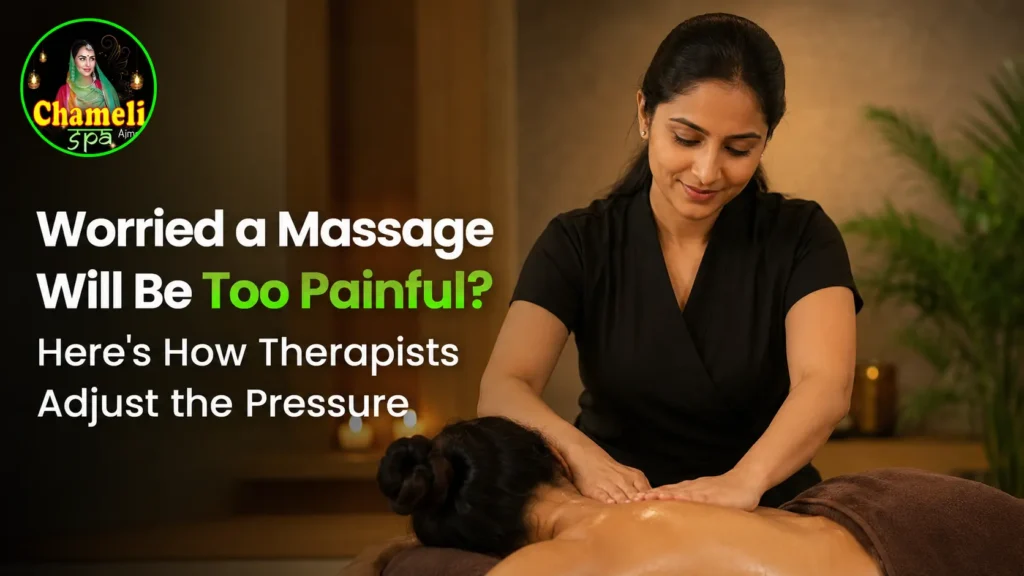
This part often surprises people. Adjusting pressure doesn’t mean starting over or stopping the massage. A skilled therapist can ease off or apply more pressure smoothly, without breaking the flow of the session.
Here’s what this usually looks like in practice:
- The therapist starts with a moderate pressure to gauge how your body responds.
- They watch for signs of discomfort, like tensing up or shifting position.
- They ask directly if the pressure feels right, especially early on.
- They adjust in real time, based on what you say or how your body reacts.
This is a normal part of a well-run session, not a special request you need to justify.
Is It Normal to Speak Up? Yes, and Here’s Why It Matters
Many men stay quiet during a massage, even when the pressure isn’t right for them. This usually comes from not wanting to seem difficult, or simply not knowing it’s okay to say something.

Speaking up isn’t rude, and it isn’t unusual. It’s the only way a therapist actually knows what’s working for you and what isn’t. Without that feedback, they’re guessing, and guessing is exactly what leads to a session that feels too rough or not effective enough.
A simple sentence is all it takes. Saying “this is a bit too strong” or “can you go firmer here” takes a few seconds, and it changes the rest of your session for the better.
Chameli’s Approach: Matching Pressure to the Person, Not the Style
Different massage styles are sometimes associated with different pressure levels, and that’s partly true. But the person matters more than the style. Two people getting the same massage in Ajman style can walk away with completely different pressure experiences, because the therapist adjusted based on what each one needed.
At Chameli, this is built into how every session runs. Whether you’re booking a Thai massage, a Russian massage, or something gentler like a Kerala massage, the therapist works with your preference first, not a fixed script tied to that style’s reputation.
This is especially useful if you’ve heard that a certain style is intense. The style sets a general direction, but your comfort still shapes how it’s actually delivered.
What Happens If You Say Nothing
This is worth addressing directly, because it’s the real risk for anxious first-timers. If you don’t say anything, the therapist has no way of knowing your session isn’t comfortable. They’ll continue at the pressure they’ve started with, assuming it’s working for you.

This is exactly why staying silent is the biggest mistake a nervous first-timer can make. The fix isn’t complicated. It just requires one honest sentence, at any point during the session, not only at the start.
A good therapist will never be upset by this. Adjusting is part of the job, not an inconvenience.
Booking With Confidence, Not Anxiety
Once you know pressure isn’t fixed, booking a massage feels a lot less risky. You’re not walking into an unknown situation and hoping it works out. You’re walking in with the understanding that the session will be shaped around what you actually want.
If you’re still unsure, you can even mention your concern before you arrive. Sending a quick message ahead of time, explaining that you’re new to massages or prefer lighter pressure, helps the therapist prepare for your session before you even sit down.
This small step removes most of the uncertainty that keeps first-timers hesitant in the first place.
A Simple Checklist Before Your First Session
If pain is your main worry, keep this in mind before your visit:
- Pressure is adjustable, not fixed, no matter which style you choose.
- You can ask for changes at any point, not just at the start.
- Speaking up is normal and expected, not awkward.
- A therapist checks in early to understand your comfort level.
- Mentioning your preference beforehand helps the session start smoothly.
Keeping these five points in mind takes most of the fear out of a first booking.
Final Thoughts
The fear of a massage hurting almost always comes from not knowing that pressure is something you control, not something fixed in advance. A professional therapist adjusts based on you, checks in during the session, and treats your comfort as the actual guide for how the massage unfolds.
If you’re comparing options for a reliable spa Ajman, this is exactly what to expect from a place that takes customer comfort seriously. At Chameli, every session is shaped around your preference from the very first few minutes, so you’re never stuck with pressure that doesn’t feel right. Whether it’s your first massage or your fiftieth, the goal stays the same: a session that works for your body, not against it.